Showing posts with label Italy. Show all posts

Sunday, June 13, 2021

Hélène d'Orléans 150

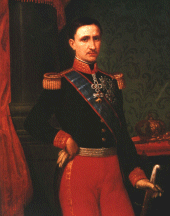
One hundred fifty years ago today, Princess Hélène of Orléans (1871-1951) was born at York House in Twickenham, England. Daughter of the Count of Paris, Orléanist claimant to the French throne, following the fall of the Second Empire she spent most of her childhood in France, until the insecure Third Republic exiled them again in 1886 following exuberant royalist celebrations of her older sister Amélie's marriage to the Crown Prince (later King) of Portugal. Thus the Orléans family returned to England and became close to the British royal family. Hélène and Prince Albert Victor (1864-1892), eldest son of the Prince of Wales, fell in love and wished to marry, and Queen Victoria was fond of her, but the religious difference proved insurmountable.

Instead Hélène married in 1895 Italy's Prince Emanuele Filiberto (1869-1931), Duke of Aosta, a nephew of King Umberto I, whose own father had briefly reigned as King of Spain, and who was next in line to the Italian throne until the birth of Crown Prince Umberto in 1904. The marriage produced two sons, Amedeo (1898-1942) and Aimone (1900-1948), but was not happy; Hélène became known for her adventurous solo travels in Africa and for her heroic humanitarian work with the Red Cross. Her life was marked by tragedies, such as the murder of her brother-in-law and nephew in Portugal in 1908, the devastation of the two World Wars, and outliving both of her sons as well as the Italian monarchy she had served for half a century. Hélène was the grandmother of Prince Amedeo (1943-2021) who died recently, as well as two princesses who survive. Edward Hanson's biography "The Wandering Princess" is a fascinating window into a long and unconventional royal life that spanned and was shaped by the major upheavals of modern European history.


Wednesday, June 2, 2021

A sad anniversary

Seventy-five years ago today, in a dubious referendum probably rigged by the Americans, an alleged majority of Italians voted to abolish the 85-year-old Italian monarchy (though the House of Savoy was nearly a thousand years old). King Umberto II (1904-1983), a good and patriotic man who had never supported fascism, nevertheless paid the price for his father’s association with it and had to spend the rest of his life in exile, his reign officially ending ten days later after only a month. The Italian Republic, which has never exactly been a model of stable or competent governance, in its arrogance dares to celebrate today as a “holiday,” even though at the time it was a sad result for many Italians who had remained loyal to the dynasty despite the hardships of the war. It is not a holiday for me. Viva il Re!

I mean no offense to my many Roman Catholic friends, some of whom agree with me, but as we contemplate the 75th anniversary of the accursed Italian referendum (on which Pope Pius XII for some reason remained silent, at a time when the Church still had rather more influence in Italy than it does today) I am deeply frustrated by the Church's modern habit of neutrality on Monarchy versus Republic, which to me is the most important issue of modern times. Maybe I want Christianity to be something other than what it actually is. Maybe I'm frankly a bit of a heretic guilty of trying to elevate my personal preferences to doctrine. (I shudder to think what would happen to my relationship with Anglicanism if the unthinkable ever happened in England. Let's not go there.) But I cannot accept Neutrality on this issue. I believe that replacing a Monarchy with a Republic is intrinsically morally wrong, much worse than most of the things that many religious people complain about today, and I want the Church to say so. It is the replacement of tradition with novelty, of beauty with banality, of humility with arrogance, of duty with willfulness, of inheritance with ideology, of what is natural with what is artificial. I cannot take seriously the moral complaints of "conservatives" who accept what I believe to be the catastrophic and evil modern worldwide trend of replacing monarchies with republics. It must be reversed. If that's not possible, then I see no point in politics. What I absolutely reject is any "conservative" or "Christian" approach to contemporary Europe that willingly consigns its Monarchies to history.


Sunday, May 9, 2021

The May King

I admit that the fact that I tend to devote more of my online time to social media is probably the main reason why this blog is not as active as it once was. However, at the moment I am unable to post on Facebook (don't ask), so in case I still have any readers, I will post about this here. Today is the 75th anniversary of the abdication of King Victor Emanuel III (1869-1947) in favour of his son King Umberto II (1904-1983). It has been speculated that if Victor Emanuel III had abdicated sooner, for example in 1943 immediately after the fall of Mussolini, he might have saved the Italian monarchy. However, we'll never know, and many monarchists including me believe that the referendum a month later was rigged by the USA.

Accordingly I have "updated" my Europe 75 Years Ago chart. Sadly, with the 75th anniversary of the accursed Republic approaching, Italy won't be on it at all much longer. And today, even the Royal Family are bitterly divided, as the New York Times reports a little too gleefully.


Monday, September 25, 2017

A Christian EU?


As a monarchist who rejects the Italian, German, and French republics in principle, I'm not especially sympathetic to conservative arguments (though Metropolitan Hilarion has also made comments favorable to monarchy) that the European Project was founded by Devout Christians but only later went off track. Alcide De Gasperi, Theodor Heuss, Konrad Adenauer, and Robert Schuman were not acceptable substitutes for legitimate Christian kings. At a personal level, they remind me of the sort of people I used to argue with on Catholic forums who were dismissive of my monarchist beliefs. That they would probably be appalled by what the EU has become today doesn't mean their sort of "conservatism" wasn't part of the problem. That Western Europe, including its republics, was a superficially decent enough place to live during the second half of the 20th century (I'm not so sure about today) doesn't make the catastrophic political changes of the first half acceptable. France, Portugal, Germany, Austria, and Italy shouldn't _have_ presidents, no matter how "conservative" or "Christian." They should have kings. We can't bring the dead of the World Wars back to life. But we can rebuild buildings, and we can restore monarchies, and we should never give up on the real Europe which is Royal as much as it is Christian.

Tuesday, March 28, 2017

RIP Infanta Alicia (1917-2017)

RIP Infanta Alicia, Duchess of Calabria (1917-2017). I had hoped she would make her 100th birthday on 13 November but it was not to be. Extremely significant genealogically, she was the heiress of the Kings of Navarre as well as of Edward the Confessor and David I of Scotland, a distinction now born by her grandson Pedro Duke of Noto (b 1968) as her son Carlos (1938-2015) predeceased her. Daughter of Elias Duke of Parma (1880-1959) and Archduchess Maria Anna of Austria (1882-1940), she married Infante Alfonso Duke of Calabria (1901-1964), nephew and onetime heir presumptive (1904-07) of King Alfonso XIII who after 1960 was one of the two claimants to the throne of the Two Sicilies. In addition to the late Carlos they had two daughters, who survive her.

Born in Austria-Hungary when her similarly long-lived aunt Zita (1892-1989) was still its Empress, Infanta Alicia had been the oldest living member of any European royal family (possibly any). With her death there are no more royals born before the end of World War I; I believe the comparatively obscure Duchess Woizlawa of Mecklenburg-Schwerin, Princess Reuss (b 17 December 1918) is now the oldest.

May she rest in peace. Condolences to the Bourbon family.

Friday, December 9, 2016

Gone but not forgotten

This must be the saddest British Pathé newsreel ever. And they don't even include Albania, Serbia/Montenegro/Yugoslavia, or Bulgaria, not to mention all the regional German ones. (France, of course, the only major European monarchy of which no film footage exists, had fallen long before the 20th century.) Excellent old footage though, with more recent captions reflecting the perspective of no earlier than the 1970s. (At least one error in the narration: in the beginning of the Russian portion, it is the Tsar's mother, not his wife, on his arm in the procession; Russian protocol gave the Dowager Empress precedence. At the end of the segment, it is indeed Empress Alexandra who walks with her husband.) Beyond Europe, the second half of the 20th century would prove as disastrous for monarchy in Asia and Africa as the first half was for monarchy in Europe.


Monday, October 5, 2015

Carlos Duke of Calabria (1938-2015)

RIP Prince Carlos of Bourbon-Two Sicilies, Infante of Spain, Duke of Calabria, who died today at 77. As the senior male line descendant of Kings Ferdinand I, Francesco I, and Ferdinand II, he was one of the two claimants to the throne of the Kingdom of the Two Sicilies for over fifty years.

Infante Carlos (1938-2015) (R) with his cousin King Juan Carlos (b 1938)


Friday, October 18, 2013

Belle Époque Rulers

I've added a new page to my website that collects four assemblies (three posters and one actual photograph) of rulers of the "Belle Époque" (1871-1914), one of my favourite periods in history (in spite of the fact that France was already lost to republicanism), at four different dates: 1896 (below), 1903-05, 1908, and 1910. These are beautiful mementos of what in many ways was a better time, when most of Europe though rapidly modernizing still rightly accepted Monarchy as the norm.

Saturday, October 5, 2013

Jaime & Viktoria

Congratulations to HRH Prince Jaime of Bourbon-Parma (son of the late Prince Carlos Hugo Duke of Parma and Princess Irene of the Netherlands) and the former Viktória Cservenyák, who were married this weekend in Wijk bij Duurstede (civ) and Apeldoorn (rel).

Thursday, September 26, 2013

Enemies of Monarchy, Heroes of Modernity

I sometimes find it depressing how in so many countries, even non-Communist ones, men I despise are widely and even officially revered:

United States:
Thomas Paine (1737-1809), Thomas Jefferson (1743-1826), and other "Founding Fathers"
France: the leaders of the French Revolution in general, though it's interesting that no individual is really singled out
Poland: Tadeusz Kościuszko (1746-1817)
Hungary: Lajos Kossuth (1802-1894)
Mexico: Benito Juarez (1806-1872)
Italy: Giuseppe Garibaldi (1807-1882)
Czech Republic (whose very name is offensive):
Tomáš Masaryk (1850-1937), Edvard Beneš (1884-1948)
Greece:
Eleutherios Venizelos (1864-1936)
Ireland: Eamon de Valera (1882-1975)
Egypt: Gamal Abdel Nasser (1918-1970)


Even in England, Oliver Cromwell (1599-1658) still has a much better reputation than he deserves, with that disgusting statue outside Parliament.

That's how it is when one is on what the world considers to be the "wrong side of history"...

Wednesday, January 16, 2013

Francesco II

Today we remember HM Francesco II, last (for the time being) King of the Two Sicilies, born on this date in 1836.  In honour of King Francesco's birthday, here is a chart and map of Europe at his accession in 1859 on the eve of the vastly overrated "Risorgimento," including all the then-sovereign rulers of small German and Italian states.  I've never done a chart this comprehensive before.  I think it gives an idea of a what a beautiful complex organic patchwork the European political order used to be, even 70 years after the French Revolution, before the centralizers, modernizers, and republicans ruined it.

Friday, March 18, 2011

United Italy at 150

Yesterday, March 17, was the 150th anniversary of the proclamation of Vittorio Emanuele II (1820-1878) of Sardinia as King of Italy; Sunday, March 20, will be the 150th anniversary of the formal abolition of the Kingdom of the Two Sicilies and thence the end of the reign of his traditionalist rival King Francesco II (1836-1894), who had been defeated at his last holdout of Gaeta the previous month. "MadMonarchist" reflects on his ambivalence towards the anniversary. I would probably support the Kingdom of Italy if it were still around, but since it isn't, do not see that the 150th anniversary of its unification via anti-clerical republican thugs is anything to celebrate. Italians themselves don't seem particularly enthusiastic either; note that this article in trying to find a positive note says that Italians "still take pride in [their] abundant beauty, art, food and architecture"--all things that have nothing to do with Garibaldi's unified state and existed long before it, when Italy was a beautifully complex patchwork of regional monarchies, small organic republics, and the Papal States.

Tuesday, February 15, 2011

The Borgias

I recently saw an extended preview for Showtime's The Borgias, which stars Jeremy Irons as Pope Alexander VI (1431-1503), an ancestor of Europe's Catholic royalty through his descendant Luisa de Guzmán (1613-1666) who married King João IV of Portugal. While there will probably be some dramatic departures from historical accuracy, it looks amazing, and I can't wait for the April 3 premiere. (What with The Borgias, HBO's Game of Thrones, and the royal wedding, April is shaping up to be quite the TV month for fans of royal spectacle.) With Irons likely to prove a more convincing lead than Jonathan Rhys-Meyers as Henry VIII, this series promises to outshine The Tudors.

Say what you like about the much-maligned Renaissance popes, but at least they had style, and didn't care about appeasing the iconoclastic "simplicity" crowd (who were already around). Nor did they interfere with the liturgy and teachings of the Church as experienced by ordinary Catholics far from Rome. As I said last month, give me an Alexander VI over a Paul VI any day.

Monday, February 14, 2011

Gaeta remembered

On the occasion of yesterday's 150th anniversary of the fall of Gaeta, last stronghold of the Kingdom of the Two Sicilies, to Garibaldi's thugs, it seems appropriate to post this article in defense of the legacy of the Italian Bourbons. Down with unified Italy (how exactly is Berlusconi an improvement on the kings of old?), and shame on Vittorio Emanuele II for cooperating with the enemies of his class and his Church!

Monday, August 23, 2010

Prince Carlos Hugo of Bourbon-Parma (1930-2010)

Prince Carlos Hugo of Bourbon-Parma (b 8 Apr 1930, Paris) died on Wednesday at 80 in Barcelona (Telegraph obituary). He was the head of the branch of the Bourbon family that ruled the Italian state of Parma until 1860 and was a "Carlist" claimant to the Spanish throne. His 1964 marriage to Dutch Princess Irene (they had four children and later divorced), younger sister of Queen Beatrix, was controversial in the Netherlands at the time. The Dutch royal family led mourning this week in The Hague. Some pictures are available at my forum (thanks to "Ethiomonarchist") here and here.

Tuesday, February 9, 2010

Prince Alexis of Windisch-Grätz (1991-2010)

It is with sadness that I report the death of HSH Prince Alexis Ferdinando of Windisch-Grätz, 18, in Caserta, Italy as a result of injuries sustained in a car accident there several days ago. Prince Alexis was the son of Mariano Hugo Prince of Windisch-Grätz (b 1955) and Archduchess Sophie of Austria (b 1959). He is survived by his parents, his siblings Prince Maximilian and Princess Larissa, and his grandmother Archduchess Helene of Austria (née Toerring-Jettenbach; b 1937). Needless to say this is an unimaginably horrible experience for any family to go through and I express my condolences.

Through his mother Archduchess Sophie, Prince Alexis was related to all the royal families of Europe, descended not only from the Habsburgs (his great-grandfather Archduke Maximilian was the younger brother of Emperor Bl Karl) but also from the dynasties of Greece, Denmark, and Russia, an unusual mix of the often distinct Protestant/Orthodox and Roman Catholic royal genealogies. His father's family was an ancient noble house of the Habsburg Empire, taking its name from a town in what is now Slovenia.

Saturday, March 14, 2009

Royal Palm Beach

I recently returned from a successful short tour of Florida with the Dallas Symphony. On our free day, March 11, I had some time to explore Palm Beach. Most monarchists, unlike most people, would probably associate Palm Beach with the mayoral "reign" of Paul Ilyinsky (1928-2004), son of Rasputin assassin Grand Duke Dmitri Pavlovich (1891-1942) and the only "Romanov" (albeit a morganatic one) to hold political power anywhere since the Revolution. I was not able to learn in advance of any particular sites with connections to Ilyinsky I could visit while there, though I realized after my return to Dallas that the Episcopal church I had stopped at, Bethesda-by-the-Sea, is where his funeral was held in 2004.

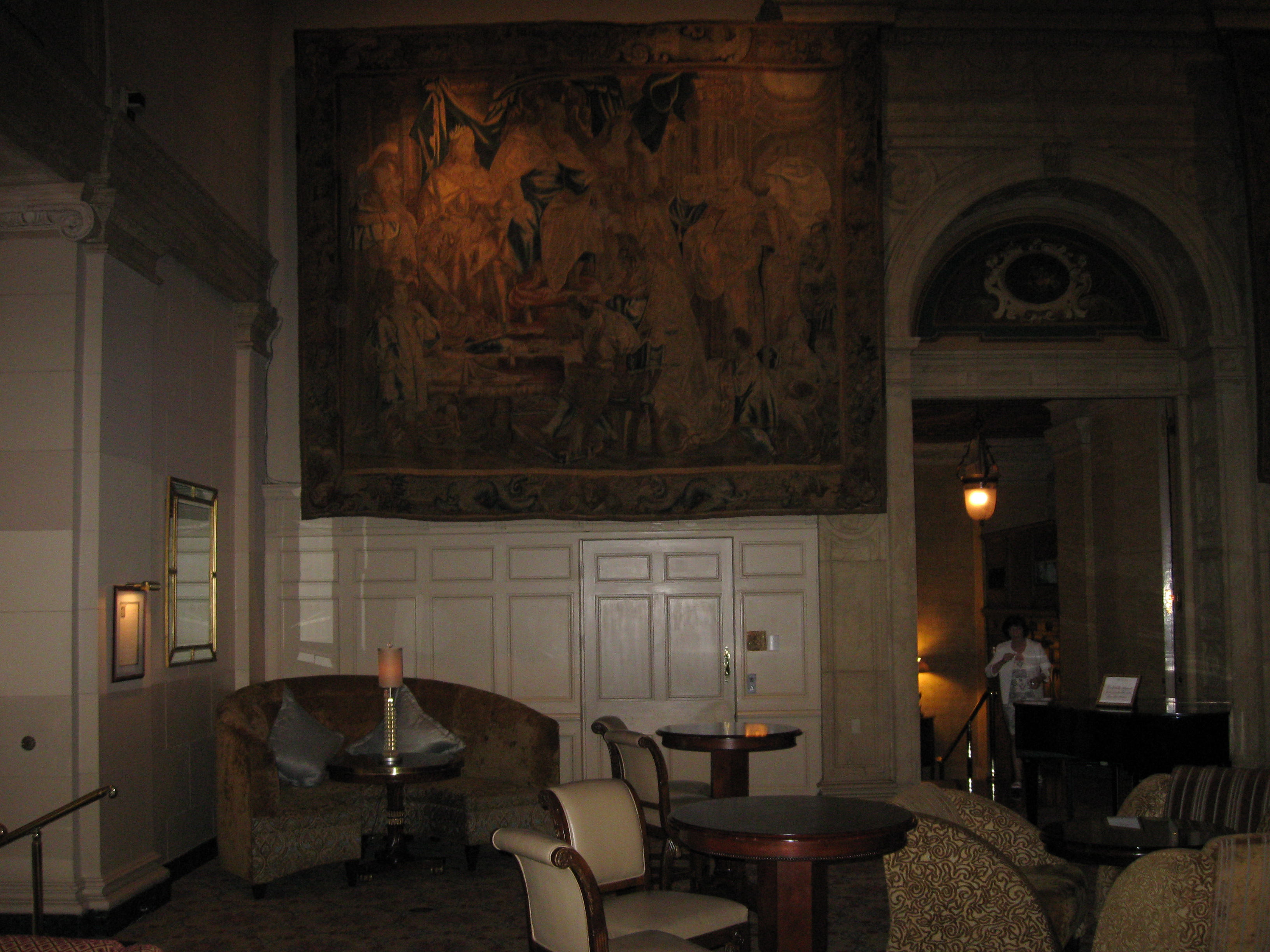
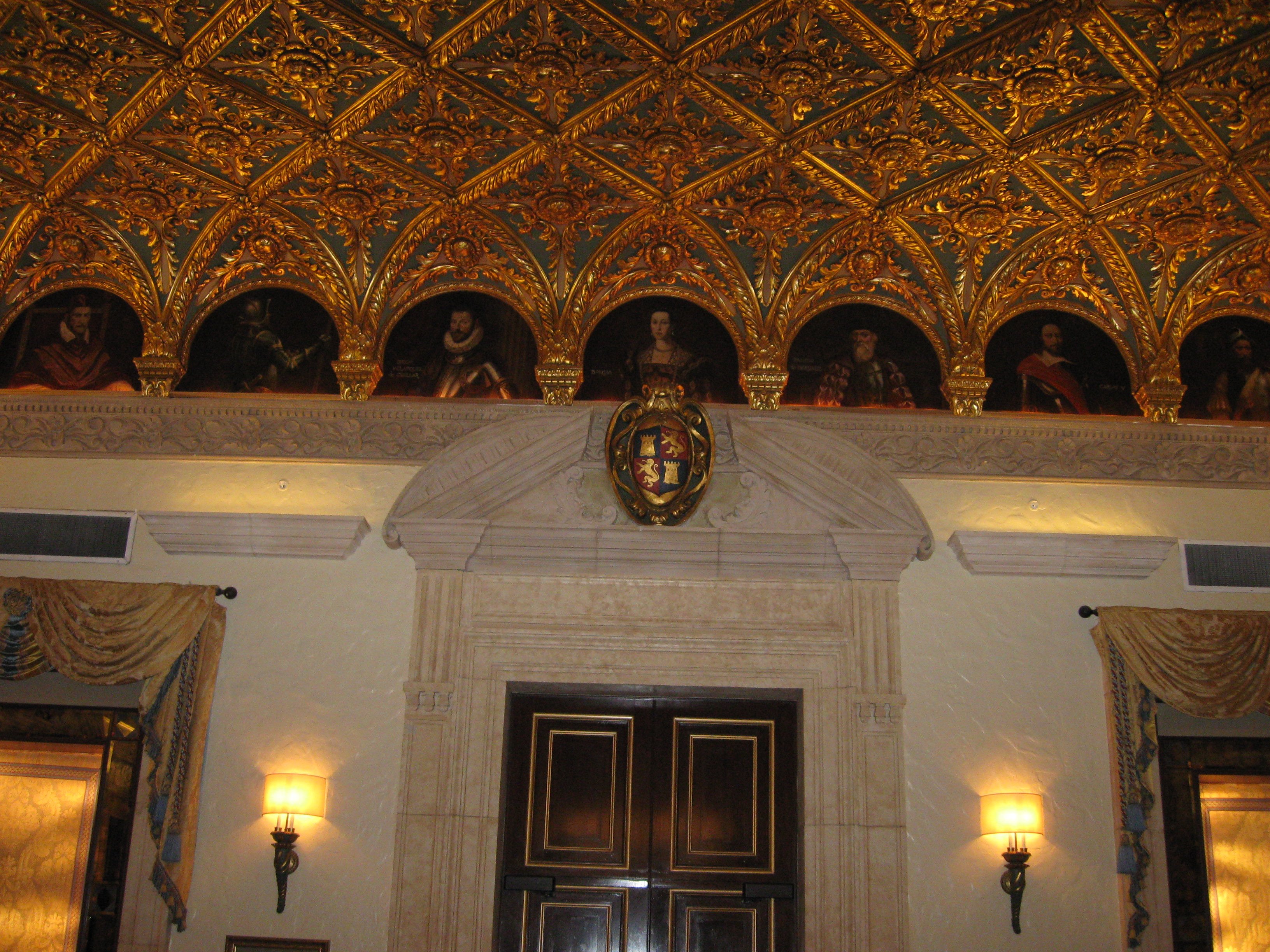
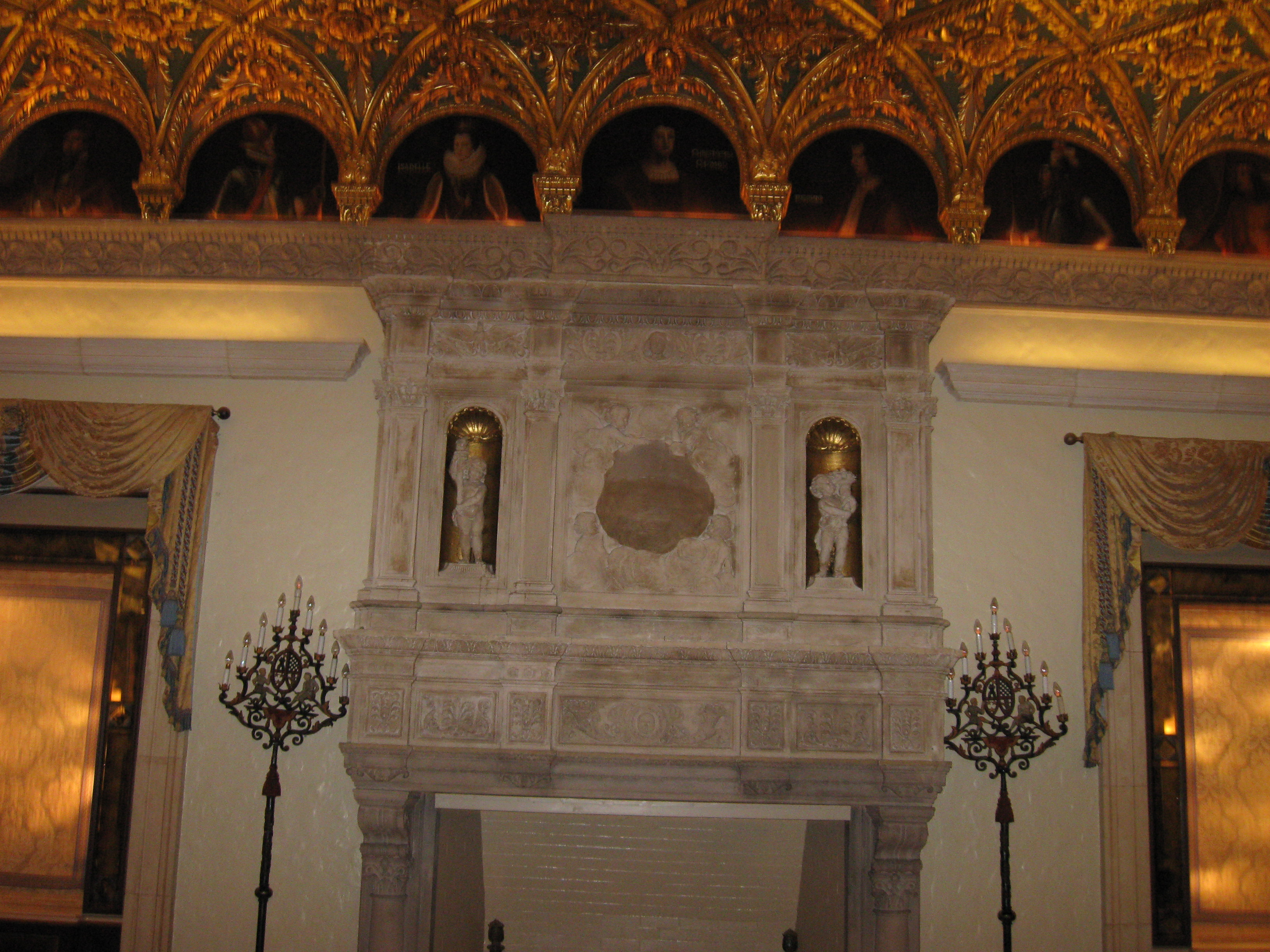
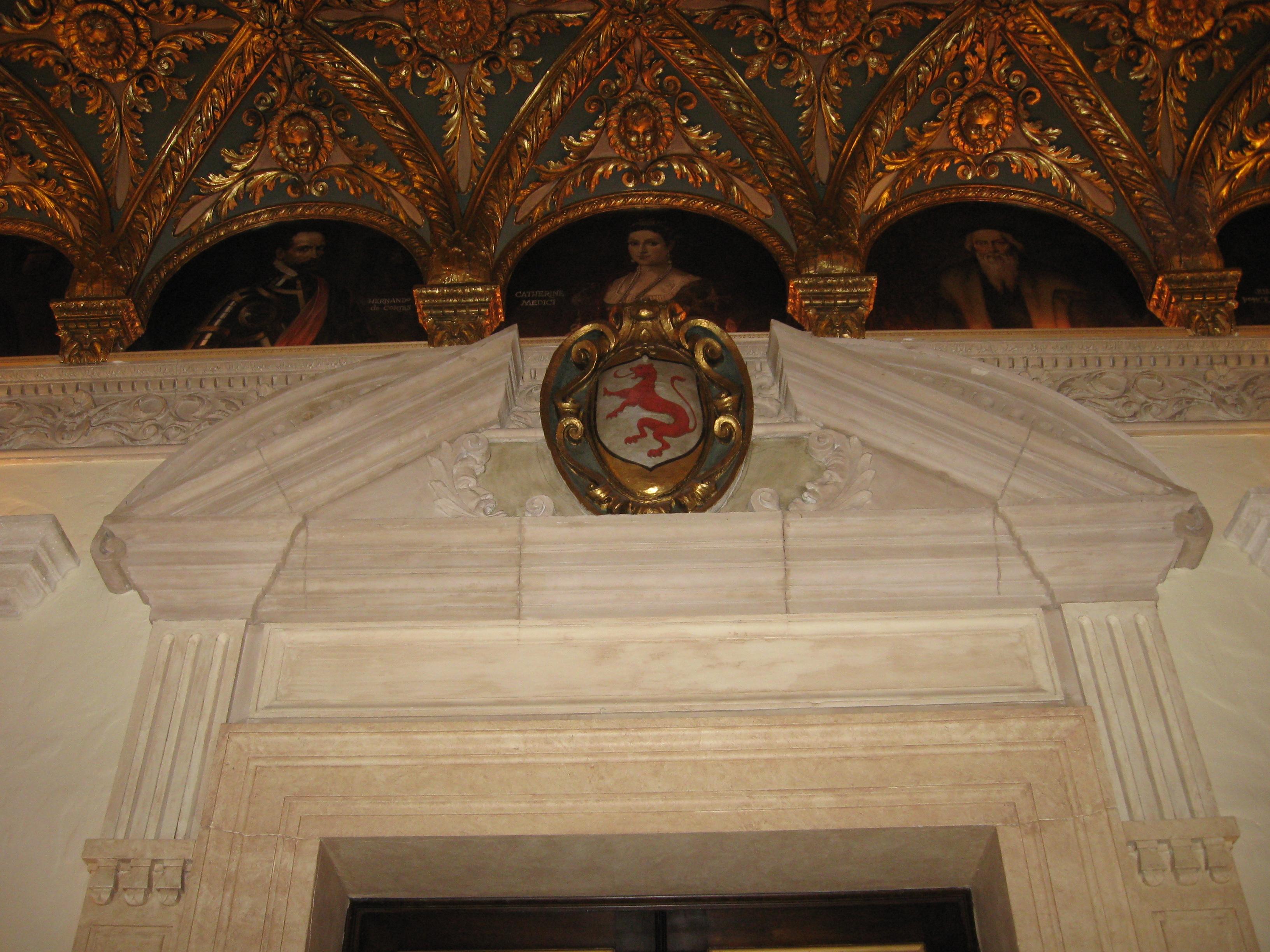
However, I did visit two attractions which were not without their royal connections. The first of these was the 1896 luxury hotel The Breakers, located right on the Atlantic Ocean, whose elaborate Renaissance-inspired decor (one could almost imagine one had left the USA behind for Italy or Spain) includes a 16th century tapestry depicting the 1556 abdication of Emperor Charles V as well as a marvelous "Gold Room" full of portraits of such figures as Charles V, Ferdinand & Isabella, Margaret of Parma, and Catherine de Medici.

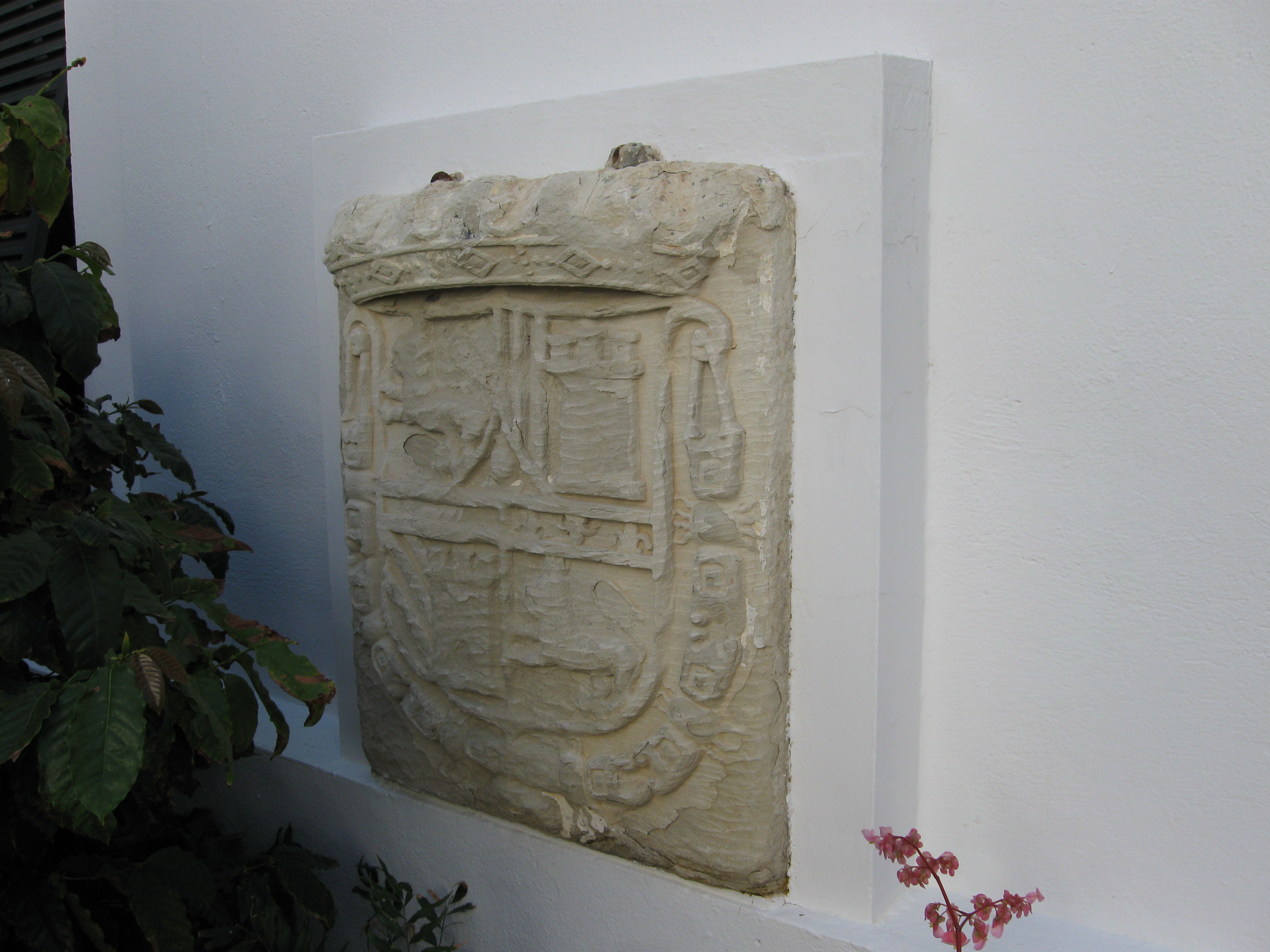
The second was the 1902 "Whitehall" mansion, now the Flagler Museum, a supreme example of "Gilded Age" luxury, some of the details of which pay tribute to icons of style such as Marie Antoinette and Louis XV. In the courtyard were two stones from a ruined 18th century Spanish fort inscribed with the name and heraldry of King Fernando VI.

I would highly recommend both of these attractions to anyone visiting Palm Beach, especially monarchists...but allow more time than I did, and if you take pictures of the Gold Room, copy down the key on the wall so that you can identify more than a few of the historical figures depicted!

Sunday, March 8, 2009

Prince Umberto of Savoy-Aosta

The future of the House of Savoy has been solidified with the birth of a son, Prince Umberto, to Prince Aimone of Savoy-Aosta and his wife the former Princess Olga of Greece, yesterday in Paris, reports the invaluable Paul Theroff. Prince Umberto is the first male born into the family since 1972.

Monday, March 2, 2009

New Genealogical Tables

I have long been interested not only in the monarchist cause and royal history but also in the minutiae of European royal genealogy. Recently, as a follow-up to a comment of mine on a thread at my monarchist forum on the engagement of Crown Princess Victoria of Sweden about relationships between reigning European monarchs eventually growing more distant as unequal marriages continue to be the norm, I prepared this table of relationships between current European sovereigns. Liking the way the table looked and inspired to attempt a bigger challenge, I then prepared this similar table for 1914. I am grateful to forum member Peter for his help in revising and refining the tables; our discussion is here in the thread on which I originally posted them.

Friday, January 2, 2009

Dancing Prince

As if the House of Savoy had not already done enough to make Italian monarchists uncomfortable, Prince Emanuele Filiberto, who by his own admission does not know how to dance, will be appearing as the latest celebrity contestant on Italy's version of "Dancing with the Stars."