I recently returned from a successful short tour of Florida with the Dallas Symphony. On our free day, March 11, I had some time to explore Palm Beach. Most monarchists, unlike most people, would probably associate Palm Beach with the mayoral "reign" of Paul Ilyinsky (1928-2004), son of Rasputin assassin Grand Duke Dmitri Pavlovich (1891-1942) and the only "Romanov" (albeit a morganatic one) to hold political power anywhere since the Revolution. I was not able to learn in advance of any particular sites with connections to Ilyinsky I could visit while there, though I realized after my return to Dallas that the Episcopal church I had stopped at, Bethesda-by-the-Sea, is where his funeral was held in 2004.
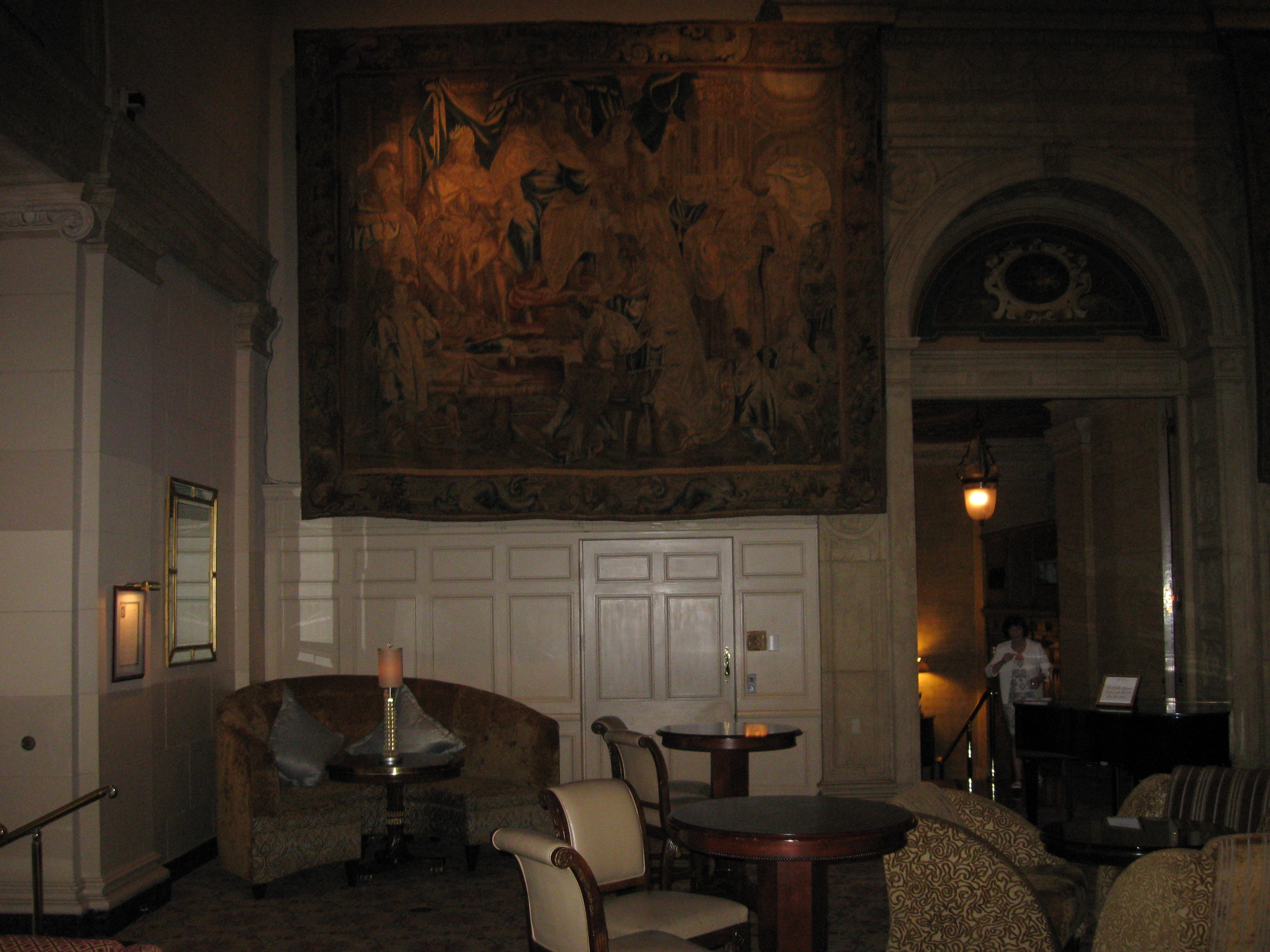
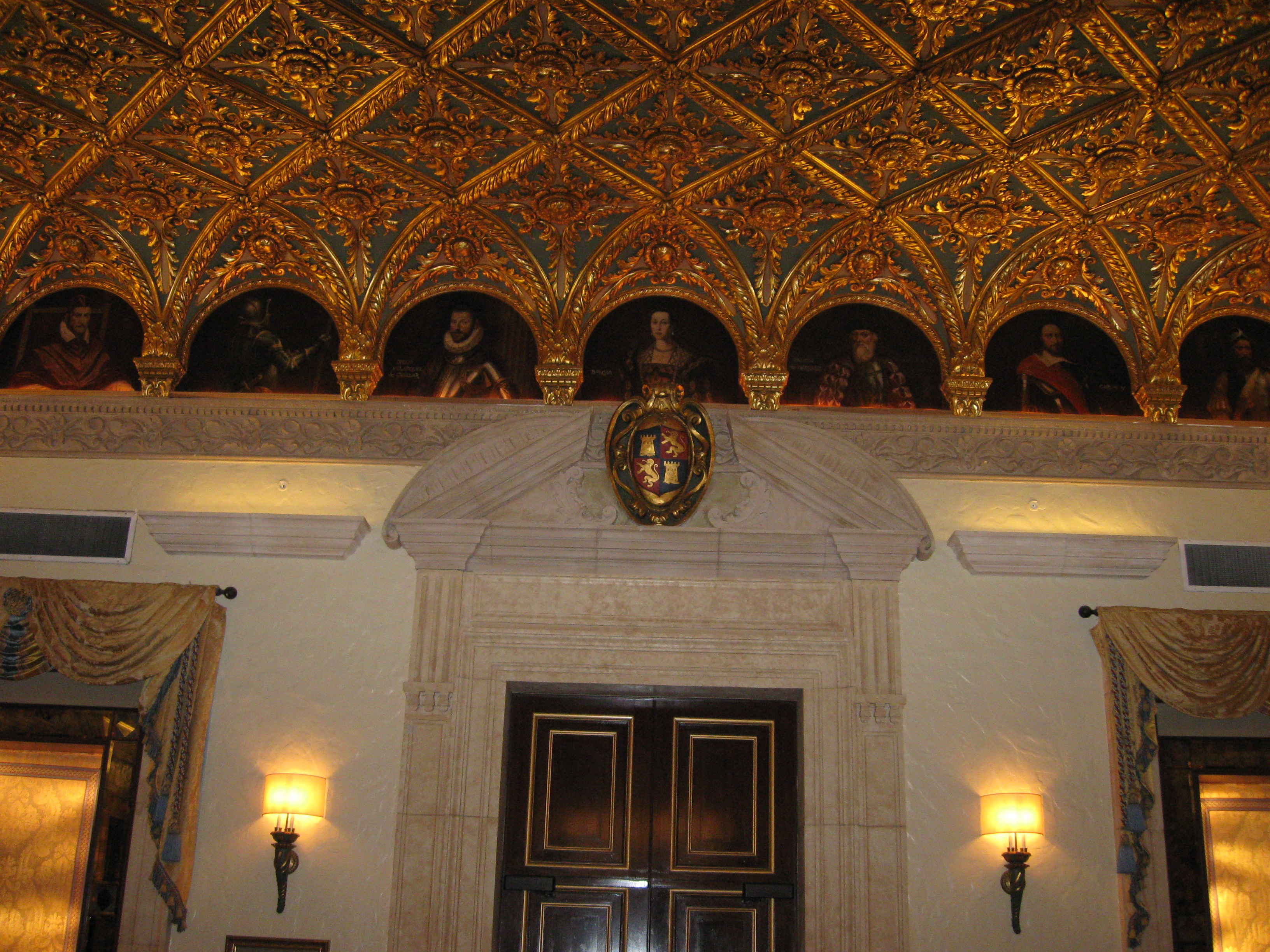
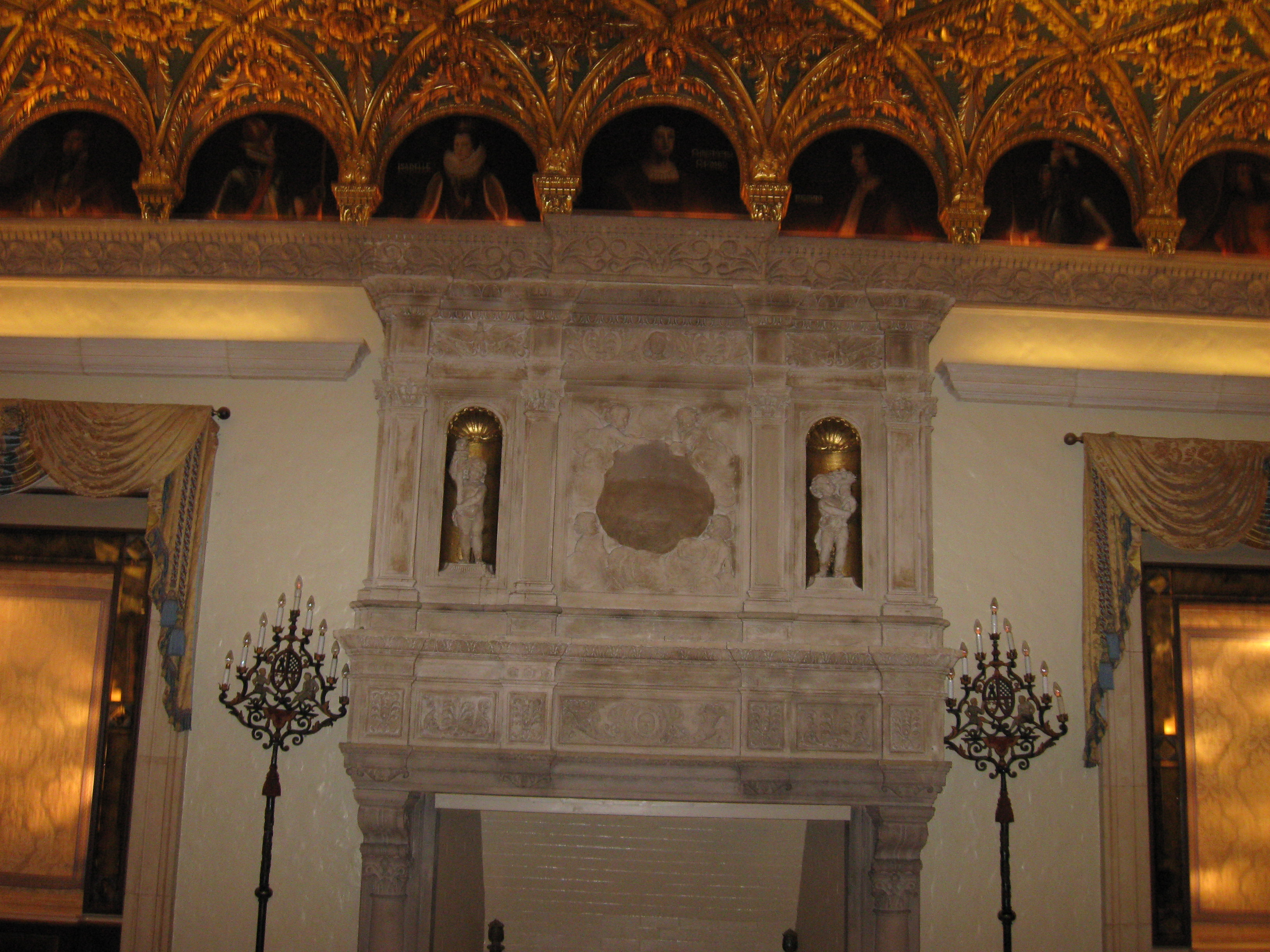
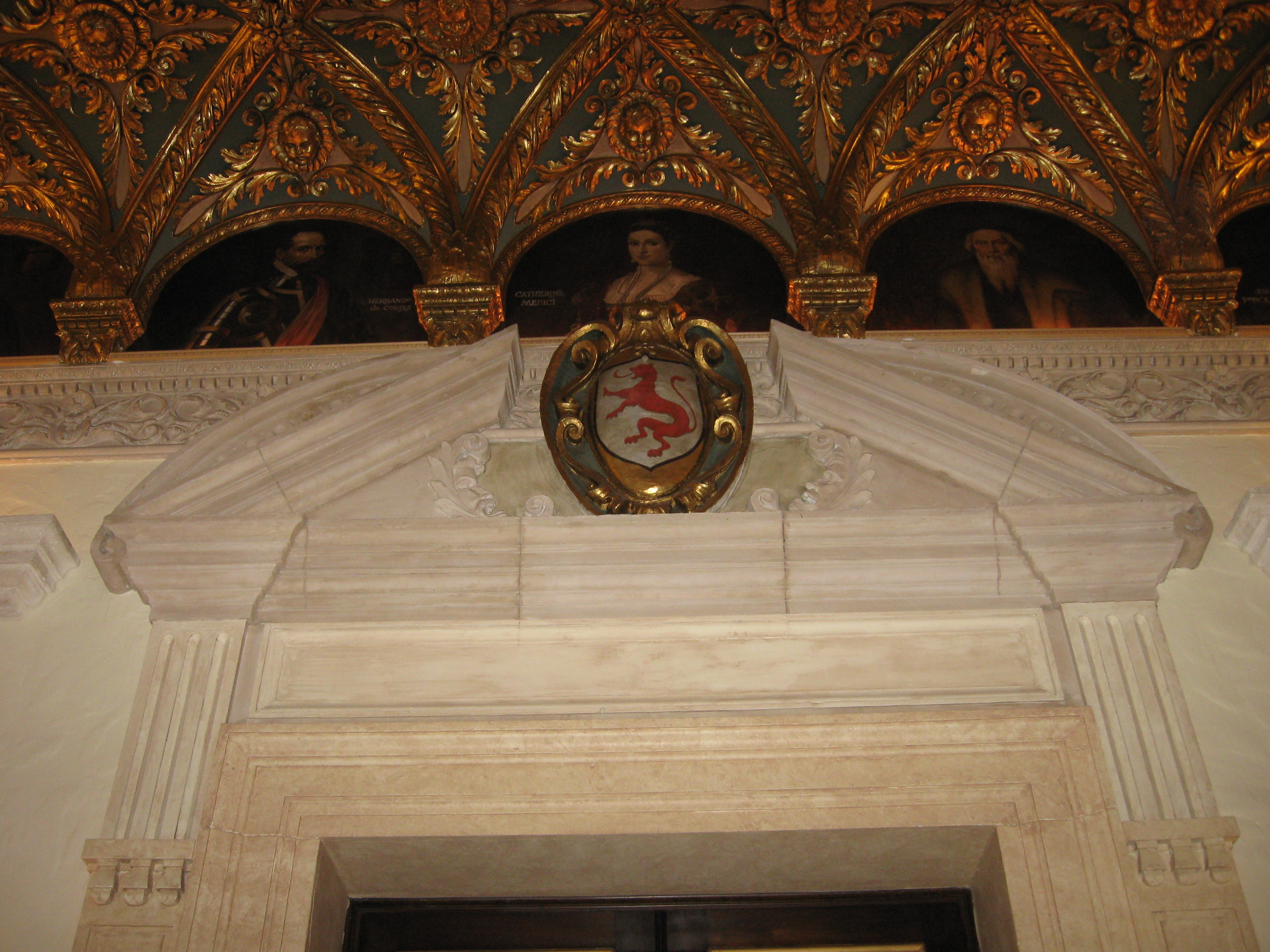
However, I did visit two attractions which were not without their royal connections. The first of these was the 1896 luxury hotel The Breakers, located right on the Atlantic Ocean, whose elaborate Renaissance-inspired decor (one could almost imagine one had left the USA behind for Italy or Spain) includes a 16th century tapestry depicting the 1556 abdication of Emperor Charles V as well as a marvelous "Gold Room" full of portraits of such figures as Charles V, Ferdinand & Isabella, Margaret of Parma, and Catherine de Medici.
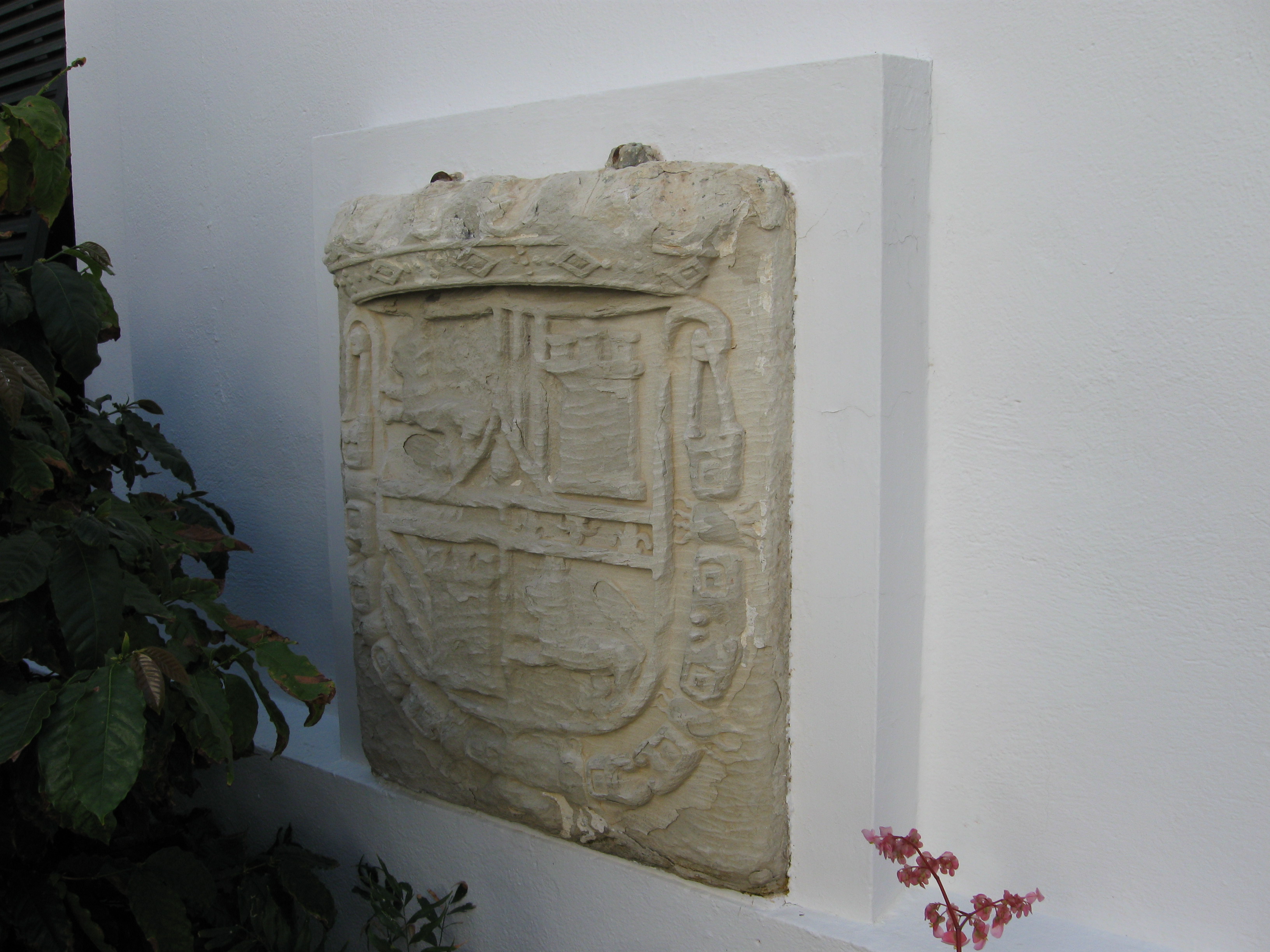
The second was the 1902 "Whitehall" mansion, now the Flagler Museum, a supreme example of "Gilded Age" luxury, some of the details of which pay tribute to icons of style such as Marie Antoinette and Louis XV. In the courtyard were two stones from a ruined 18th century Spanish fort inscribed with the name and heraldry of King Fernando VI.
I would highly recommend both of these attractions to anyone visiting Palm Beach, especially monarchists...but allow more time than I did, and if you take pictures of the Gold Room, copy down the key on the wall so that you can identify more than a few of the historical figures depicted!
Saturday, March 14, 2009

Sunday, March 8, 2009
Prince Umberto of Savoy-Aosta
The future of the House of Savoy has been solidified with the birth of a son, Prince Umberto, to Prince Aimone of Savoy-Aosta and his wife the former Princess Olga of Greece, yesterday in Paris, reports the invaluable Paul Theroff. Prince Umberto is the first male born into the family since 1972.
Friday, March 6, 2009
"Lavish Lifestyles"
A young member of my forum who is relatively new to monarchism asked how he could defend the "lavish lifestyles" of ancien regime royalty and aristocracy. As this is a question that often comes up in discussions of monarchy I thought I'd also post my own response here, while encouraging visitors to read others' answers at the original thread as well.
First of all, Marie Antoinette never said "let them eat cake"; that was revolutionary propaganda.
This article is a good start:
http://traditioninaction.org/bkreviews/A_007br_Trianon.htm
It is true that there was certainly inequality in the era of the monarchies, but there is also inequality today in democracies and republics. Many of the improvements in quality of life we take for granted today are the results of technological and medical advances that have benefited everyone; in many ways the life of a "poor" person in France today is more comfortable than that of an 18th-century French king.
There always have been and always will be "haves" and "have nots," and I think it's better to be honest about it as a formalized class system is. Ironically, generally the monarchs who have been blamed for Revolutions were themselves genuinely compassionate and charitable and did what they could to alleviate the suffering of the less fortunate. This was certainly true of Louis XVI and Marie Antoinette.
A perhaps more important point, though, is that the existence of so-called "lavish lifestyles" is a good and necessary thing, even for those not able to live them themselves. This may seem a shocking thing to say, but think about it: many non-wealthy people depend, and have depended throughout history, for their very livelihoods on professions and trades that could not exist without "lavish lifestyles." Think of manufacturers of luxury goods and those who supply their materials. Think of chefs creating gourmet delicacies, and those who supply their ingredients. Think of architects of palaces and mansions and those who work on building them, and those who supply their materials. Think of artists who in order to make a living from painting must charge prices for their work that no one of limited means could possibly afford. And of course, think of those of my own profession, musicians, who have relied on the patronage of wealthy people, now almost as much as then, though the form of such patronage has changed. Public concerts as we know them today did not exist in the 18th century and before; if there had been no royalty and aristocrats able to afford their own court orchestras (part of that much-maligned "lavish lifestyle"), no one could have earned a living as a secular musician, as I like to imagine myself doing had I lived in a previous era.
Therefore, it is an economic fallacy to assume that the lavish lifestyles of royalty and aristocracy caused poverty. Rather, there would have been even more poverty if the ordinary people in the professions described above had not been able to indirectly benefit from the economic activity generated by those lavish lifestyles. This has been proved time and time again by the results of the egalitarian revolutions that have attempted to eliminate the luxury of privileged classes: more misery and suffering for everyone.
First of all, Marie Antoinette never said "let them eat cake"; that was revolutionary propaganda.
This article is a good start:
http://traditioninaction.org/bkreviews/A_007br_Trianon.htm
It is true that there was certainly inequality in the era of the monarchies, but there is also inequality today in democracies and republics. Many of the improvements in quality of life we take for granted today are the results of technological and medical advances that have benefited everyone; in many ways the life of a "poor" person in France today is more comfortable than that of an 18th-century French king.
There always have been and always will be "haves" and "have nots," and I think it's better to be honest about it as a formalized class system is. Ironically, generally the monarchs who have been blamed for Revolutions were themselves genuinely compassionate and charitable and did what they could to alleviate the suffering of the less fortunate. This was certainly true of Louis XVI and Marie Antoinette.
A perhaps more important point, though, is that the existence of so-called "lavish lifestyles" is a good and necessary thing, even for those not able to live them themselves. This may seem a shocking thing to say, but think about it: many non-wealthy people depend, and have depended throughout history, for their very livelihoods on professions and trades that could not exist without "lavish lifestyles." Think of manufacturers of luxury goods and those who supply their materials. Think of chefs creating gourmet delicacies, and those who supply their ingredients. Think of architects of palaces and mansions and those who work on building them, and those who supply their materials. Think of artists who in order to make a living from painting must charge prices for their work that no one of limited means could possibly afford. And of course, think of those of my own profession, musicians, who have relied on the patronage of wealthy people, now almost as much as then, though the form of such patronage has changed. Public concerts as we know them today did not exist in the 18th century and before; if there had been no royalty and aristocrats able to afford their own court orchestras (part of that much-maligned "lavish lifestyle"), no one could have earned a living as a secular musician, as I like to imagine myself doing had I lived in a previous era.
Therefore, it is an economic fallacy to assume that the lavish lifestyles of royalty and aristocracy caused poverty. Rather, there would have been even more poverty if the ordinary people in the professions described above had not been able to indirectly benefit from the economic activity generated by those lavish lifestyles. This has been proved time and time again by the results of the egalitarian revolutions that have attempted to eliminate the luxury of privileged classes: more misery and suffering for everyone.
Tuesday, March 3, 2009
Monarchical Entertainment
I generally am not much of a television watcher, but monarchists in the US may wish to tune in on Sunday evenings this spring. NBC is launching a modern retelling of the story of King David, Kings, on March 15, and the third season of Showtime's The Tudors begins on April 5.
Meanwhile, Andrew Roberts praises the historical accuracy of upcoming film The Young Victoria, released tomorrow in the UK and hopefully soon in the US.
Meanwhile, Andrew Roberts praises the historical accuracy of upcoming film The Young Victoria, released tomorrow in the UK and hopefully soon in the US.
Ekaterinburg 1918: No Survivors
As if any more confirmation were needed, a new scientific report confirms what most monarchists and historians have known for decades: that all seven Romanovs were indeed murdered by Bolshevik thugs in Ekaterinburg on the tragic night of July 16-17, 1918.
Monday, March 2, 2009
King Hridayendra?
Nepal's ruling Maoists reportedly fear that King Gyanendra's visit to India could be part of a plan to restore his 7-year-old grandson Prince Hridayendra to the throne. I hope they're right!
New Genealogical Tables
I have long been interested not only in the monarchist cause and royal history but also in the minutiae of European royal genealogy. Recently, as a follow-up to a comment of mine on a thread at my monarchist forum on the engagement of Crown Princess Victoria of Sweden about relationships between reigning European monarchs eventually growing more distant as unequal marriages continue to be the norm, I prepared this table of relationships between current European sovereigns. Liking the way the table looked and inspired to attempt a bigger challenge, I then prepared this similar table for 1914. I am grateful to forum member Peter for his help in revising and refining the tables; our discussion is here in the thread on which I originally posted them.
Subscribe to:
Posts (Atom)